ANAHEIM, Calif. — Protein is showing up everywhere in consumer products, from soda to chips. But “not all proteins are created equal,” Bryan Santee, chief commercial officer of PepsiCo, said at ExpoWest earlier this month.
“You walk the floor, everyone has a function,” Santee said of the vendors on the show floor. “What’s going to differentiate in the future is backed by science and credibility with that consumer.”
PepsiCo wants to differentiate itself in a crowded field of functional ingredients by ensuring they’re backed by science while still prioritizing taste and affordability.
“How you take some of these functional benefits and apply them to food is really important,” Santee said.
PepsiCo taps into trends that are relevant with the modern consumer while supporting its growth strategy, Santee said. Today, that looks like functionality, simple ingredients and nutrient density.
With clean ingredients now table stakes for consumers, Santee said PepsiCo is relying on its research and development arm to learn how to obtain that label without compromising the authenticity of the brand or its taste.
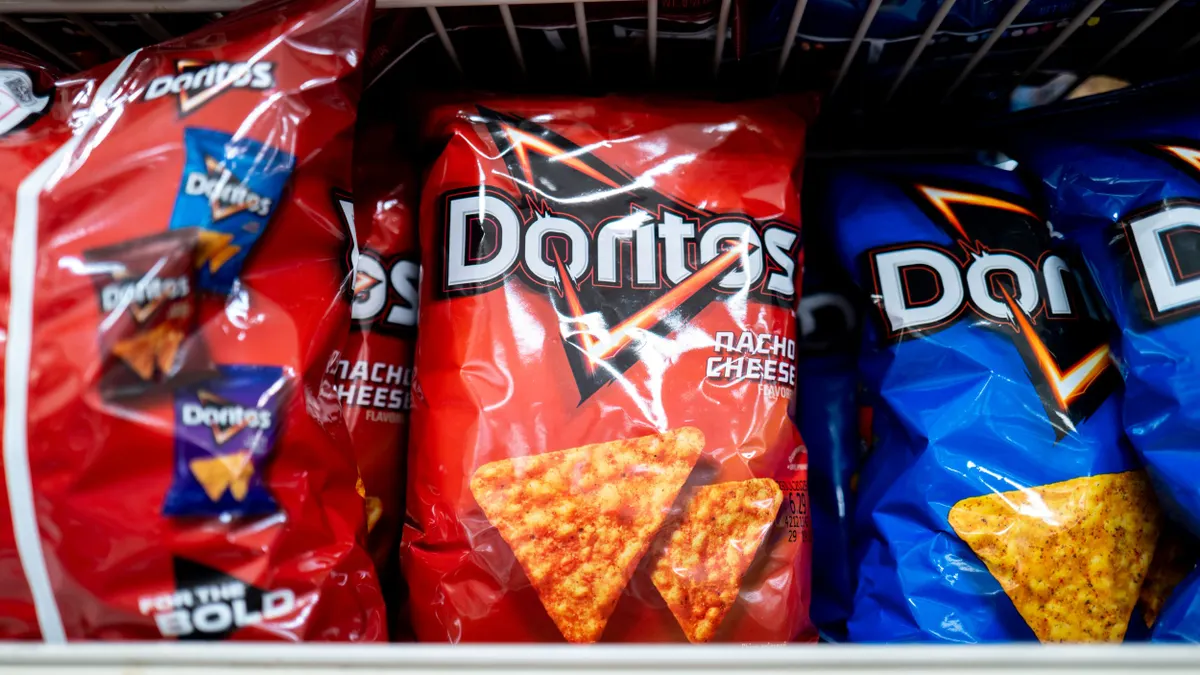
PepsiCo’s approach to better-for-you ingredients comes as the snack giant refreshes its portfolio to attract consumers who have become skeptical of processed foods. The company has launched Cheetos without artificial dyes and high-protein Doritos, plus a Gatorade with 75% less sugar.
When reformulating, PepsiCo’s utmost priority is taste and ensuring that added protein or fiber don’t compromise the flavor or texture consumers have come to expect.
With protein infiltrating nearly every new market, PepsiCo is confident that it can win by relying on strong brand equity around taste and affordability. The company has slashed prices on its snacks by up to 15% and reduced its offerings to cut costs and reignite sales.
“It’s probably counterintuitive to say protein and Doritos go together, but I think what we find is consumers are looking to get more protein in their diets, and how do they do that in an appropriate way?” Santee said. “There’s other products on the market that serve that need, but can they do it with the taste and affordability we bring to that?”
One of the biggest challenges in reformulating is that shoppers often don’t actually know what they want, according to Jenny Gusba, PepsiCo vice president of research and development, global beverage strategy and technical project management. Many companies see a “say-do gap” between what customers say they want and how they actually spend their money when presented with a reformulated product.
Gusba gave Gatorade as an example, because consumers pick the sports drink based on color. This presents a problem for R&D, which needs to figure out how to offer the color consumers want without artificial dyes.
“We’ve got to make sure that it still feels — even if it’s a little different — it’s still the red they pick,” Gusba said.
Because of PepsiCo’s scale, Santee said it can also drive the better-for-you category not only through reformulation, but also through acquisitions, and it has a responsibility to lead the way in the industry.
PepsiCo has used M&A to broaden its reach. Recently it acquired prebiotic soda brand Poppi and tortilla chip maker Siete. Both deals drove the company’s relevance in functional ingredients and cultural relevance, Santee said.
The snack and beverage giant leverages M&A when a brand already has an authentic story and a unique capability. The acquisition also has to make sense in PepsiCo’s portfolio, Santee said.
The deal for Poppi, for example, offered PepsiCo an opportunity to scale an already proven better-for-you brand that had a cult following among consumers.
“We felt we could scale that brand in a meaningful way, leveraging our distribution system and getting after outlets that they could not do in their current state,” Santee said of Poppi. “It’s a special kind of formula that makes sense.”
Correction: This story has been updated with the correct spelling of Jenny Gusba’s name.