ANAHEIM, Calif. – Consumer’s growing interest in protein and other functional ingredients are disrupting the snacking sector, and Mondelēz’s venture capital arm is ready to jump in on the next trend.
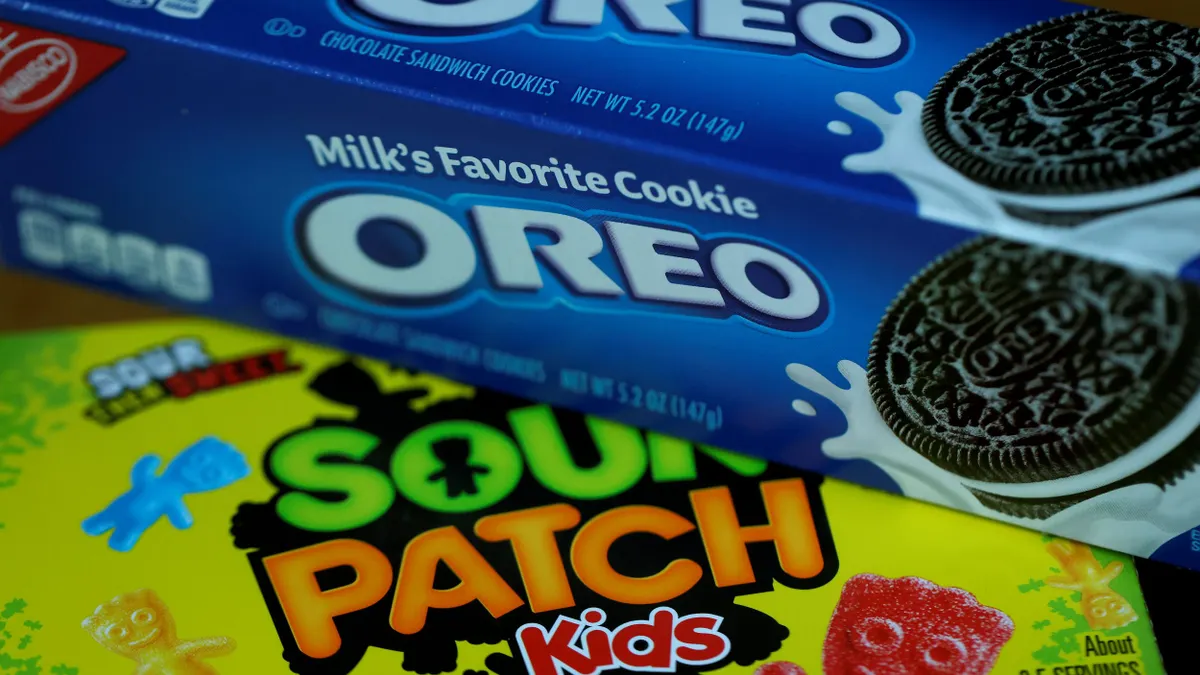
Richie Gray is the global head of SnackFutures, the snack giant’s venture capital arm tasked with following the future of consumer trends and identifying brands that could boost the Oreo maker's portfolio. Gray spoke with Food Dive at Natural Products Expo West in Anaheim, California, earlier this month about the key trends the snack giant is watching.
The segment is in the midst of an “evolution,” Gray told Food Dive, as more consumers become aware of the ingredients in their snacks and how food can impact their own physical well-being. While Mondelēz and SnackFutures are most focused on identifying new brands to meet consumers' health needs, there are some areas in the wellness space where the snack giant is taking a more “skeptical” approach.
However, Gray told Food Dive that better-for-you isn’t the only thing consumers want in their snacks. People want more out of their foods, he said, whether that be functional properties or an indulgent experience.
This interview has been edited for brevity and clarity.
FOOD DIVE: How is Mondelēz keeping up with changing consumer preferences?
RICHIE GRAY: In our core business, we always try to follow the consumer. But equally, we’ve been conscious in recent years to have a whole part of our strategy around what we call “mindful snacking,” which means everything from portion control to improving the nutritional content of our core brands. That's a constant process of evolution because you always need to make sure that you're still delivering the taste that consumers want and love, but doing it in a better way. We continue to do that. We've made great progress on our core brands.
Then there's SnackFutures. We're tasked with finding the brands and the technologies that offer a different way to innovate, that can represent the disruption of the future in snacking, that might take us beyond our core categories, or that might help us innovate faster on our core categories. That's the case more with tech solutions. On brands, we’re investing in brands that are showing that they can really disrupt snacking, that are really taking share from traditional snacking categories.
What specific types of companies does SnackFutures look out for?
We're interested in brands that are going to disrupt our core categories: chocolate, biscuits, baked snacks and bars, but we do look beyond that as well. There are interesting dynamics at play. I find it fascinating what's going on in the way fruit snacks are kind of converging with candy. Fruit is a way to deliver on better-for-you, while still delivering the taste consumers want. Some of that's playing out in candy, the fun of candy merged with the better-for-you aspect of food, that looks really interesting.
We still love indulgence, by the way. But there's a continued wave and trend around permissible indulgence. Brands that are able to deliver indulgent tastes, indulgent experiences, but do it in a way that is slightly better for you. I love some of the innovation that's out there that's bringing multi-textured, multi-sensory experiences back to snacking.
How have you seen the health-focused snack trend evolve over time?
For years, we talked about better-for-you, and usually that meant the same stuff, just a little bit better — maybe a bit less sugar, a bit less salt. Consumers are now talking more about food trends on social media. Things are put in front of consumers more, and you get trends like protein. There's a whole “fibermaxxing” thing going on now. Clearly there is a kind of knock-on effect coming from GLP-1 usage that is also making consumers more aware about what they can be putting in their bodies.
The focus on nutrient-dense products are not just relevant for people that are taking GLP-1 drugs, they are relevant to everybody. I think it’s that heightened awareness. We saw it come through protein. We see it now come through fiber, and lots of other emerging trends around things like gut health, mental health. It's still quite niche, but you can sense that there's just more and more interest in understanding these things.
How could trends like gut health and mental health shape future innovation?
We see it in a lot of ingredient technologies, but we’re seeing some brands that are also playing on these: It kind of emerged out of the whole “food is medicine” trend that we saw coming.
There are brands that are focusing on gut health as their primary benefit in different categories. We see it in bars. We see it in savory snacks.
On the mental health side of things, the energy category has developed significantly. Originally it was all about physical energy. Sports came out of beverages and went into energy bars. Then there was the whole thing around long lasting energy, and consumers' understanding of oats and other grains as a source of long lasting energy. But mental stimulation and functionality, which have been around in beverages for a long time, we now see coming into even indulgent categories like chocolate.
We see some interesting brands that are offering functionality, including kind of mental awareness or mental health, cognitive energy.It’s starting to come into a number of different categories. It's unproven, though. We remain interested, but skeptical. We're kind of keeping a watchful eye on how and to what degree can that actually penetrate consumers' snacking habits.
What would you recommend to smaller food brands who may want to work with SnackFutures or are looking to adapt to these changing trends?
We work with a lot of smaller businesses and look at how they can scale. My advice is to stay really focused on what you're good at, but to recognize that sometimes where you start out might not be where you end up.
Because things are moving faster, there is probably a greater need than ever for early-stage businesses to recognize when a pivot is necessary and to see potential that they might be sitting on. A simple example might be, fiber has suddenly become very interesting for consumers, and there's a lot of brands out there that could be making a stronger fiber claim, but are not because probably they were focusing on other things.
I think it's making sure that you're constantly in touch and following the consumer and ready to either dial up certain things in your proposition or pivot to where the greatest relevance is going to be.